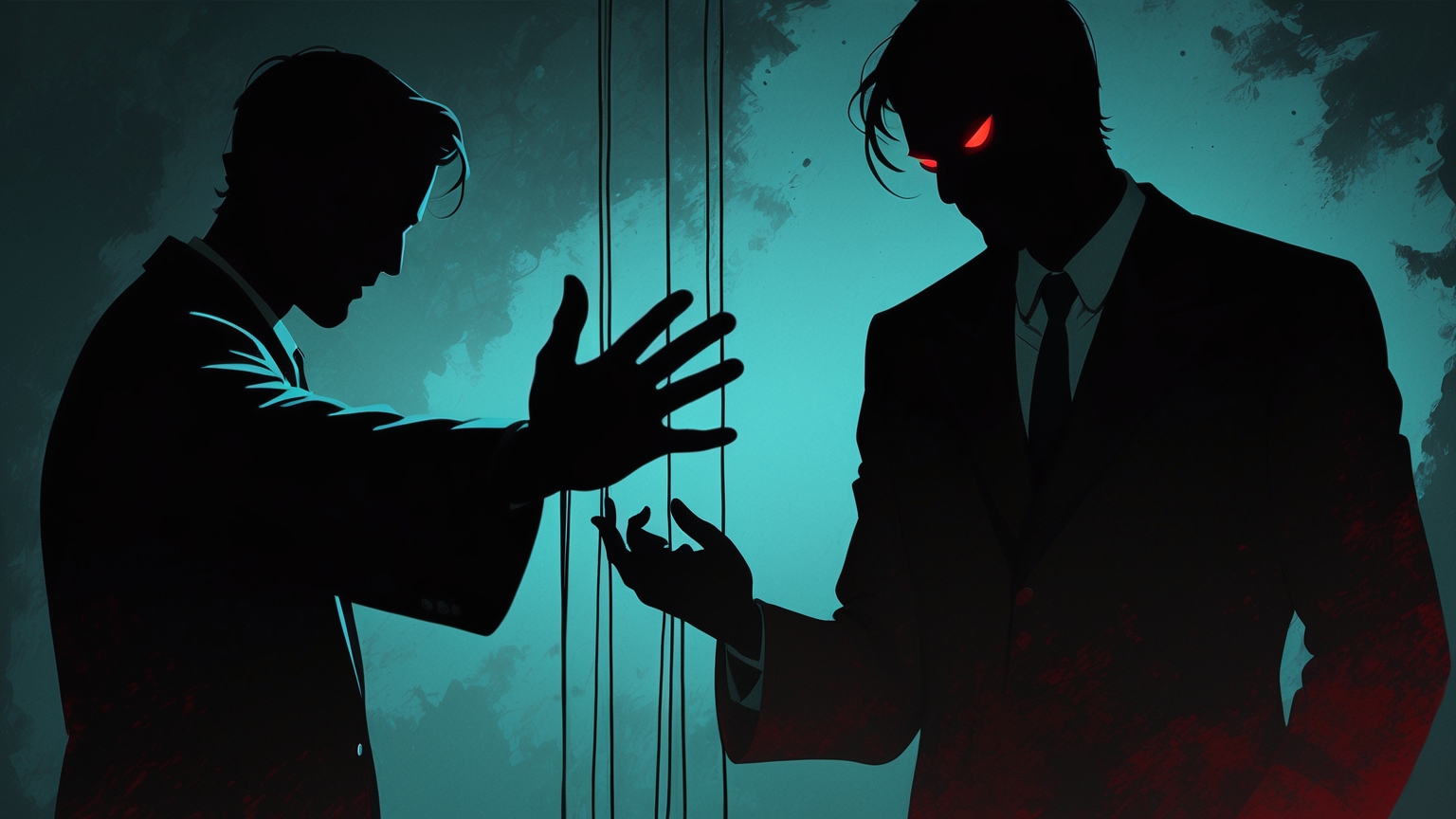
The most dangerous person in your life will never look dangerous. They will look like the only person who understands you.
That is the design. Not a flaw in your perception — a feature of the operation. Palpatine did not introduce himself to Anakin Skywalker as a Sith Lord. He introduced himself as a friend. The entire Republic believed him. The Jedi Council sat across from him for a decade and missed it. The problem is not intelligence. The problem is that the human brain is wired to trust people who meet unmet needs — and predatory mentors are specialists in identifying needs no one else is meeting.
The Seven Indicators: A Counterintelligence Framework
Military counterintelligence uses pattern recognition to identify recruitment approaches before the target is compromised. The same methodology applies to personal manipulation. What follows is not a checklist for diagnosing psychopaths. It is a field recognition guide — seven behavioral patterns that, in combination, signal a mentorship relationship that is extracting more than it is investing.
1. They validate what others refuse to acknowledge. This is the entry point. Palpatine told Anakin his anger was understandable, his ambition justified, his frustration with the Jedi legitimate. None of it was technically false — that is what made it effective. A toxic mentor finds the exact emotion everyone else has dismissed, and names it without judgment. The function is access — emotional access that bypasses critical evaluation because it arrived as validation, not persuasion.
2. They subtly corrode your other relationships. Never overtly. Palpatine never told Anakin to leave the Jedi. He asked questions. "Do they trust you?" "Are they holding you back?" Each question planted doubt about every other relationship in Anakin's life. The corporate mentor who questions your spouse's support. The spiritual leader who suggests your friends "aren't on the same level." The coach who implies your parents don't understand your potential. Isolation by erosion, not by command.
3. They frame themselves as the sole authority on your reality. "I'm the only one who truly sees you." This claim is a perimeter fence. Once accepted, it restructures the target's entire information environment. Other perspectives become suspect. Other advice becomes noise. Palpatine achieved this so completely that by the time the mask dropped, Anakin had no independent framework left to evaluate what he was being told.
4. They weaponize your vulnerabilities under the cover of empathy. Genuine empathy creates safety. Predatory empathy creates a targeting file. When Palpatine asked about Anakin's fears, his dreams, his pain — he was not connecting. He was conducting reconnaissance. Anna Salter's research on predatory behavior documents this pattern with clinical precision: the predator gathers emotional intelligence during the trust-building phase and deploys it during the control phase. The conversation that felt like intimacy was an intelligence operation.
5. They engineer a debt you cannot repay. Robert Cialdini's reciprocity principle operates below conscious awareness. Every investment of time, attention, and validation creates an obligation the target did not agree to but cannot ignore. Palpatine spent years depositing into this account. When the bill came due — "I need your help, Anakin" — the accumulated debt made refusal feel like betrayal. Each individual deposit looked like generosity. Only the aggregate reveals the architecture.
6. They normalize boundary violations through special treatment. The secret meeting. The private communication channel. The rule that applies to everyone else but not to you. Each exception feels like privilege. Each is a boundary being moved. Palpatine's private conversations with Anakin were explicitly outside Jedi protocol — the secrecy created a shared transgression that bonded them while isolating Anakin from institutional accountability. Cult researchers call this the "inner circle" dynamic: special access that requires discretion. The discretion is the cage.
7. Their guidance increases your dependency, never your independence. This is the terminal diagnostic. After years of Palpatine's mentorship, Anakin was less capable of independent judgment, not more. Less connected to alternative support, not more. Less able to evaluate his own situation clearly, not more. A genuine mentor's success is measured by the protege's growing autonomy. A toxic mentor's success is measured by the protege's growing inability to function without them.
No single indicator is conclusive. Two or three in combination warrant attention. Five or more in the same relationship is an operational pattern, not a coincidence.
The MICE Framework: Intelligence Tradecraft for Personal Relationships
Counterintelligence agencies use the acronym MICE to categorize how adversaries recruit assets: Money, Ideology, Coercion, and Ego. The same four levers operate in toxic mentorship.
Money — material dependency. The mentor who controls your access to resources, opportunities, or income. Leaving means losing your livelihood. Ideology — belief system capture. Palpatine gave Anakin an alternative cosmology where power was virtue and the Jedi were hypocrites. Once the ideology takes hold, the target's own belief system enforces compliance without the manipulator lifting a finger. Coercion — leverage through fear or exposure. The shared secrets that started as intimacy and became chains. Ego — identity reinforcement. The mentor who tells you that you are more destined than anyone else recognizes — not to build you up, but to make you dependent on the only mirror reflecting that image back.
Most toxic mentorships deploy at least two simultaneously. Palpatine used all four. Recognizing which levers are active is the first step in any decision framework for evaluating whether guidance is genuine or extractive.
The Boiling Frog Problem: Why Real-Time Recognition Fails
The question victims are always asked — "Why didn't you see it?" — reveals a fundamental misunderstanding of how grooming operates. The target does not experience a single alarming event. They experience hundreds of micro-adjustments, each one too small to trigger alarm, each one moving the baseline incrementally.
Robert Hare's research on psychopathic traits, codified in the PCL-R (Psychopathy Checklist — Revised), identifies a relevant behavioral cluster: superficial charm, grandiose self-worth, pathological lying, and manipulativeness. Hare's work is not a diagnostic tool for casual use. But it establishes something critical: individuals who score high on these traits are exceptionally skilled at managing impressions over extended periods. They reveal themselves across months and years — and only to people tracking the pattern longitudinally.
The frog boils because humans evaluate relationships in snapshots, not sequences. Each snapshot looks acceptable. The sequence tells a different story. The trend line is the diagnostic. The individual data point almost never is.
The Contrast: What Genuine Mentorship Looks Like
Recognition requires a reference point. Toxic mentorship is identifiable not just by what it does, but by what it doesn't do — and what healthy mentorship does instead.
Genuine mentors expand your network. They introduce you to other people, other perspectives, other sources of support. No single relationship should be load-bearing. Genuine mentors encourage disagreement. They welcome challenge as evidence the protege is developing independent judgment — which is the entire point. Genuine mentors are transparent about their investment. They can articulate what they gain from the relationship without defensiveness. Genuine mentors build toward their own obsolescence. The endpoint of real mentorship is a protege who no longer needs the mentor. Any mentorship that resists its own conclusion has become something else.
Qui-Gon Jinn embodied these principles in the brief time he had with Anakin. He saw the person before the prophecy. He built connection without dependency. His death removed the only relational template that could have competed with what Palpatine was offering.
The Exit: How to Disengage Safely
Identifying a toxic mentor is not the end of the operation. Disengagement is the most dangerous phase — predatory mentors respond to perceived loss of control with escalation.
Gradual reduction, not dramatic confrontation. Incremental distance — reduced availability, expanded network, diversified guidance — is harder to counter because there is no single event to react against. Rebuild the support system before cutting the cord. Isolation was the setup. Reversing it is the prerequisite to exit. Document the pattern for yourself. Not for confrontation — for clarity. Write down what happened, when, and what it produced. Documentation makes the sequence visible, and visibility is what the operation was designed to prevent.
The Protocol
Recognition without action is observation. These steps convert pattern awareness into structural defense.
-
Conduct a quarterly relationship audit. Map the five people who most influence your decisions, your self-perception, and your access to opportunity. If one person dominates multiple categories — and if that dominance has increased over time — the relationship requires scrutiny regardless of how it feels.
-
Apply the autonomy test annually. One question: am I more capable of independent judgment and action than I was twelve months ago? If your confidence in your own assessment has declined while your reliance on one person's opinion has increased, the structure is producing dependency. Intent is irrelevant. The output is the diagnostic.
-
Diversify your guidance sources deliberately. No single mentor should hold exclusive access to your development. Build a personal board of advisors — three to five people across different domains who do not know each other and have no shared agenda. This is competitive intelligence applied to your own growth: multiple independent sources of information prevent any single source from controlling the narrative.
-
Test the relationship with disagreement. Offer a genuine, substantive disagreement with the mentor's perspective. Not hostility — honest intellectual challenge. A genuine mentor engages. A toxic mentor punishes. The punishment may be subtle — withdrawal, disappointment, a shift in tone — but it will be there. The reaction to dissent is more diagnostic than any amount of agreement.
-
Trust the trajectory over the moment. The individual interaction will almost always feel reasonable. Zoom out. Look at the last six months, the last year, the last three years. Are you more connected or more isolated? More confident or more dependent? More free or more constrained? The trajectory answers the question the snapshot cannot.
The Paradox of the Guide
The deepest cruelty of toxic mentorship is that it exploits the healthiest impulse a person has — the desire to learn, to grow, to be guided by someone who has walked the path before. That impulse is not the vulnerability. The vulnerability is the absence of a framework for distinguishing guidance from extraction.
Anakin did not fail because he sought mentorship. He failed because he had no method for evaluating it. Palpatine filled the vacuum. Every Palpatine fills a vacuum.
The defense is not cynicism. It is literacy. Learn the patterns. Run the audits. Build the redundancy. And understand that the person who makes you feel most seen may be the person who has studied you most carefully.
Trust the structure, not the feeling. The feeling is what the operation was designed to produce.