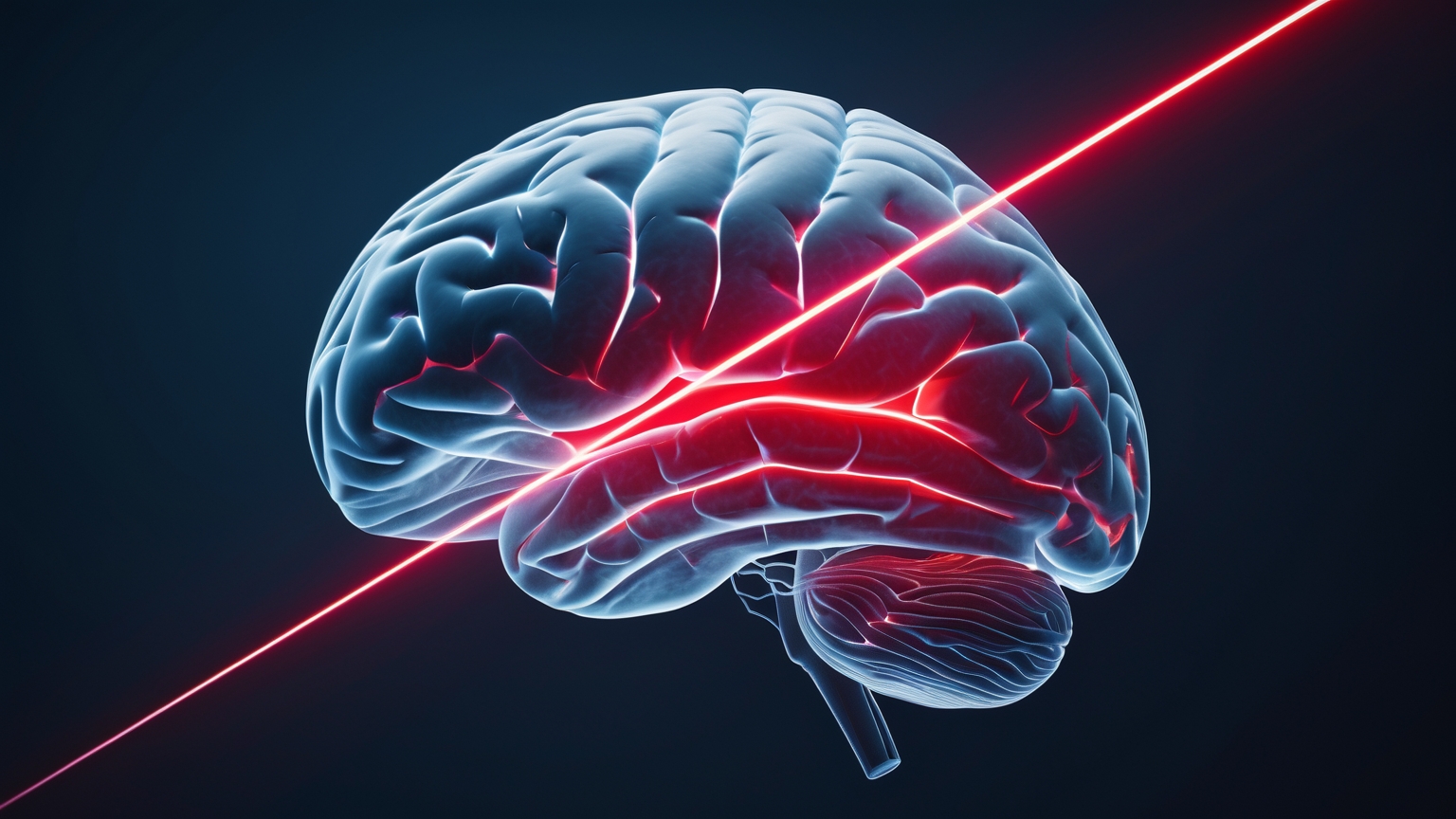
Everyone believes their emotional reactions are faster than they can control. That belief is both true and incomplete — and the incomplete part is costing you.
The amygdala fires before your prefrontal cortex even knows there's a situation. That part is accurate. But the charge doesn't last indefinitely. The neurochemical surge has a half-life. And according to neuroscientist Jill Bolte Taylor, who mapped this cycle after her own stroke, the full biochemical response to an emotional trigger dissipates in approximately 90 seconds — and the initial peak, the moment of maximum reactivity, lasts closer to six seconds.
Six seconds. That's the window.
The Amygdala Hijack Has a Biological Expiration Date
Antonio Damasio's research at USC on somatic markers — the body-based signals the brain uses as emotional shortcuts — showed that emotional responses are not abstract. They're physical. The body floods with stress hormones. Heart rate spikes. Cognitive resources are rerouted away from higher-order reasoning.
But that flood has to recede. The question is whether you actively prolong it.
Every time you replay the triggering thought — "I can't believe they said that," "this is unacceptable" — you re-trigger the amygdala. You don't let the charge dissipate. You keep pressing the button. The six-second window extends to six minutes. Then sixty. Not because the stimulus persists, but because you're feeding the response.
Why Naming the Emotion Is the Intervention
Paul Ekman, who spent decades mapping the relationship between emotion, facial expression, and cognition, identified something critical: the act of labeling an emotion engages a different part of the brain than experiencing it. This is now confirmed through fMRI research — affect labeling, simply naming what you're feeling, reduces activity in the amygdala and increases prefrontal engagement.
You're not suppressing the emotion. You're changing which brain system is in charge of it. Any reliable decision framework builds this pause into its architecture — because a decision made during the amygdala's peak charge is not a decision at all.
"I'm angry" is not the same experience as being consumed by anger. The first is observation. The second is identification. The first opens a door. The second locks you inside.
The Reactive Decision Is the Expensive One
The reason this matters beyond emotional wellness is that reactive decisions compound. Research on negotiation behavior consistently shows that choices made in the first ninety seconds of heightened arousal are systematically worse than choices made after a deliberate pause — less accurate, more polarized, harder to walk back.
If you've ever sent a message you regretted, escalated a conflict that didn't need escalating, or made a call you reversed by morning — you know what a reactive decision costs.
The people who build reputations for composure aren't less reactive neurologically. They've simply learned to use the window.
The Protocol
- Pause before acting. When you feel the surge, do nothing for six seconds. Literally count if you need to.
- Label the emotion out loud or in writing. "I'm feeling threatened" or "I'm frustrated" — specific beats vague.
- Take one slow exhale. The extended exhale activates the parasympathetic nervous system, which counteracts the cortisol spike.
- Reframe before responding. Ask one question: "What's the outcome I actually want here?" Not what you feel. What you want.
The six-second rule is not about suppressing your emotional life. It's about reclaiming authorship of it.
Your amygdala fires first. That's not a flaw — it's a survival feature. But you don't have to let the first response be the final response.
The pause is where the leverage lives.