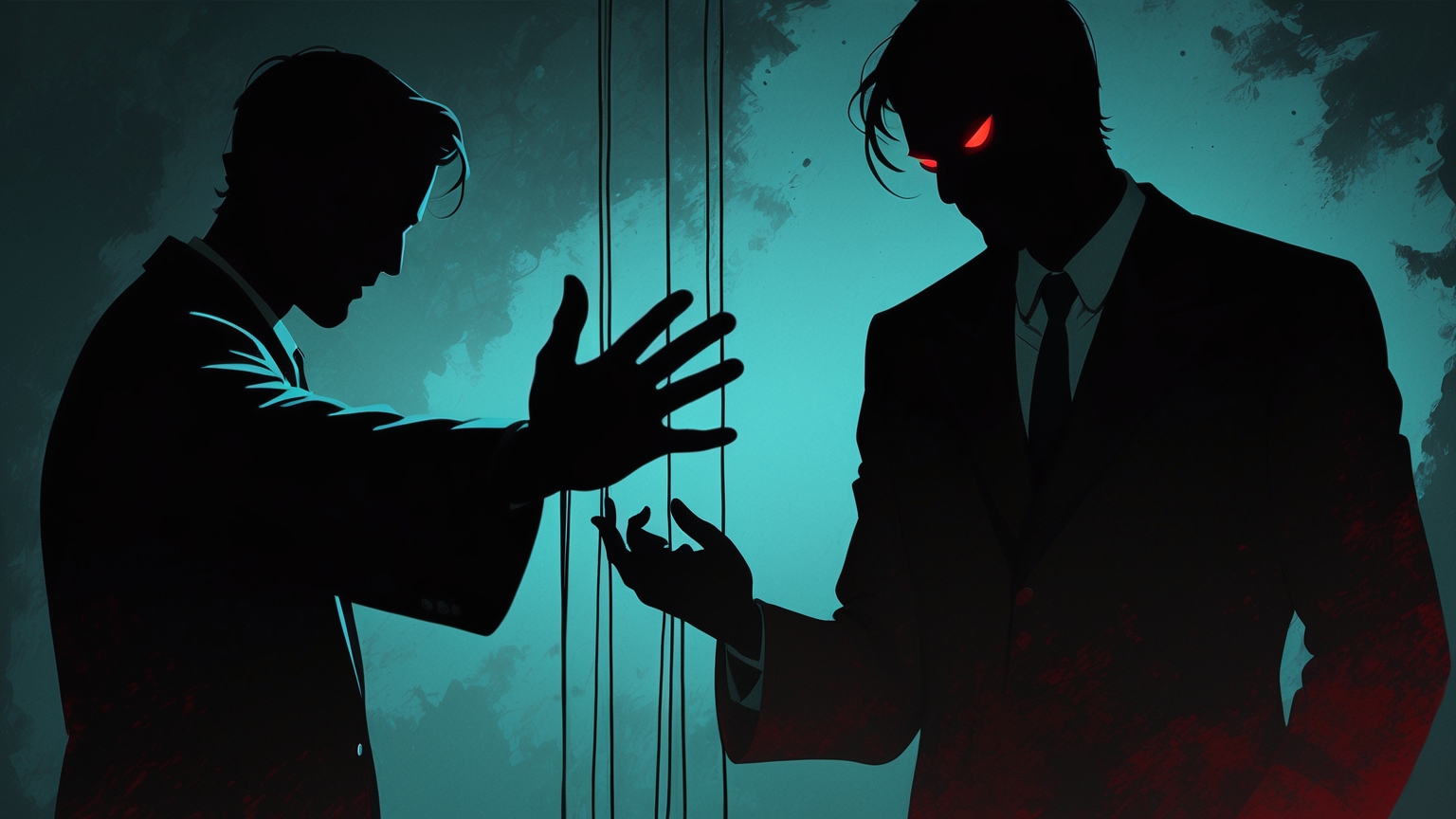
Ten articles. One transformation. And the single most important lesson is the one most people get wrong: Anakin Skywalker did not fall because of a character flaw. He fell because every system that should have caught him had a hole in it — and the holes aligned.
That alignment is not fate. It is architecture. And architecture can be redesigned.
The Swiss Cheese Model of Psychological Collapse
James Reason's Swiss cheese model — developed to explain catastrophic failures in aviation and medicine — describes how complex systems fail. No single layer of defense has to be perfect. Each layer has holes. Disasters happen when the holes in every layer line up simultaneously, allowing a hazard to pass through the entire stack without being caught.
Anakin's fall follows this model with clinical precision. No single failure destroyed him. His identity was foreclosed before he could form it. His attachment wounds went unprocessed. The Jedi Council provided zero psychological safety. His fear response was systematically weaponized. His moral reasoning was eroded through incremental desensitization. Each was a layer with a hole. Palpatine was the hazard that passed through all five.
If the collapse required alignment across every layer, then shoring up any single layer might have been enough to stop it. One secure attachment relationship. One emotionally safe institution. One pre-commitment device against moral drift. Any of these could have interrupted the cascade.
This is the foundation of the prevention protocol: not one impenetrable wall, but multiple independent layers. In cybersecurity, this principle is called defense in depth — no single control is sufficient, so you stack controls that each catch what the others miss. The same principle applies to psychological resilience.
The Five Vulnerability Layers
The entire series maps to five distinct layers, each with its own failure mode and its own defense.
Layer 1: Identity. James Marcia's research on identity foreclosure shows that an identity assigned from the outside — by parents, institutions, prophecy — is structurally brittle. No roots, because the person never chose it. The defense: identity must be discovered through exploration, not installed through assignment. Know who you are before anyone tells you what you should be.
Layer 2: Attachment. John Bowlby's framework and Daniel Kahneman's loss aversion explain how unprocessed loss turns love into a threat response. The defense: process grief before it becomes a lever. Build earned security through relationships that tolerate discomfort without reinforcing control patterns.
Layer 3: Institutional. Amy Edmondson's research on psychological safety demonstrates that systems which punish honest disclosure don't eliminate problems — they drive them underground. The defense: build environments where fear, doubt, and struggle can be named without consequence. If the system cannot hold your honesty, the system is the vulnerability.
Layer 4: Fear management. Daniel Goleman's amygdala hijack and Joseph LeDoux's fear conditioning research show how threat responses bypass rational evaluation. The defense: recognize when your fear is being weaponized — when the person amplifying the threat is also offering the only solution.
Layer 5: Moral reasoning. Steven Hassan's BITE model and Robert Cialdini's influence research document how moral boundaries are moved incrementally until the target is standing somewhere they never would have gone voluntarily. The defense: pre-commitment devices — decisions made in calm that bind your future self in crisis.
Each layer is independent. Each has its own diagnostic criteria, its own failure signature, and its own repair protocol. The system holds when enough layers hold. It collapses when too many fail simultaneously.
Pre-Commitment: The Architecture That Holds When You Cannot
Thomas Schelling's work in behavioral economics introduced the concept of pre-commitment devices: actions taken in a rational state that constrain behavior in a future irrational state. Odysseus lashing himself to the mast before the Sirens. A person in recovery removing alcohol from their home before the craving hits.
Anakin had zero pre-commitment devices. Every critical decision was made in real time, under maximum emotional load, with his prefrontal cortex offline. Palpatine presented the dark side as the only exit. And Anakin made the most consequential decision of his life in the neurological state least capable of evaluating it.
The antidote is not willpower. Willpower degrades under stress — Roy Baumeister's ego depletion research established this. The antidote is architecture: decisions made in advance, written down, and externalized so they operate even when the person behind them is compromised.
"If someone offers me a solution that requires betraying my principles, I will tell three people before acting." "If I notice my support network shrinking to one person, I will reconnect with two others within a week." "If I feel I cannot survive without a specific outcome, I will wait 48 hours before making any irreversible decision."
These are not affirmations. They are structural constraints. They remove the decision from the moment of crisis and relocate it to a moment of clarity. The mast holds Odysseus. The protocol holds you. Any serious decision framework operates on this principle — the framework exists because in-the-moment evaluation cannot be trusted under pressure.
The Isolation Diagnostic
Across every article in this series, one pattern recurred more consistently than any other: isolation preceded collapse. Anakin was separated from his mother. The Jedi suppressed his emotional connections. Palpatine systematically drove wedges between Anakin and every alternative support source. By the time the final decision arrived, Palpatine was the only voice in the room.
This is not coincidental. It is the single most reliable precondition for psychological exploitation. Cults isolate. Abusers isolate. Authoritarian systems isolate. The mechanism exploits a fundamental feature of human cognition: people evaluate reality through social consensus. When your reference group narrows to one, that one person's reality becomes yours.
The defense is architectural. Maintain at minimum three independent sources of honest feedback: people who do not know each other, do not share the same incentives, and will tell you things you do not want to hear. If any relationship in your life is contracting that number, the contraction itself is the signal — regardless of the reason offered.
Viktor Frankl, writing from inside Auschwitz, identified the mechanism that sustained survival under conditions designed to destroy the self: meaning. Not happiness. Not comfort. Not power. Frankl's logotherapy posits that the primary drive in human beings is not pleasure or power but the discovery of purpose.
Vader had unlimited power and zero purpose. The most feared being in the galaxy and the most psychologically empty. The deepest layer of the firewall is existential: know what you are living for. A person anchored to meaning can withstand fear, loss, institutional failure, and manipulation — because the anchor holds when everything else is in motion. A person without that anchor will grab whatever is closest when the current pulls.
The Protocol
This is the synthesis. Five layers. Five checks. One annual audit that stress-tests the entire system. This is not a philosophy — it is a maintenance schedule for psychological infrastructure.
-
Audit your identity layer quarterly. Write down the three labels that most define how others see you. Then write down three things true about you that have nothing to do with those labels. If the second list is harder to generate, your identity is load-bearing on external assignment. Reconnect with pursuits that exist outside your primary role. Identity foreclosure is silent — it reveals itself only when the label is threatened and there is nothing underneath.
-
Map your attachment architecture annually. Identify your three most important relationships. For each, answer: "If this person left tomorrow, would my sense of self survive intact?" If the answer is no, that relationship is carrying weight it was never designed to hold. This is not a signal to withdraw — it is a signal to diversify your emotional load-bearing structure. Earned security is built, not born. Find a therapist, a support group, or a relationship that can hold your grief without reinforcing your grip.
-
Run a psychological safety audit on every system you belong to. For each institution — workplace, family, friend group, community — ask: "Can I name a fear, a failure, or a doubt here without social consequence?" If the answer is no, you are inside a system that will drive honest disclosures underground. Either build the safety that is missing or recognize the system as a vulnerability layer with a hole in it. You do not have to leave every unsafe system. You do have to stop expecting it to catch you.
-
Install three pre-commitment devices against fear-driven decisions. Write them down. Share them with at least one person. The three that cover the widest surface area: (a) "I will not make irreversible decisions within 48 hours of an acute fear response." (b) "If someone presents themselves as the only solution to my problem, I will seek a second opinion before acting." (c) "If I notice my support network shrinking, I will take active steps to reconnect before I need to." These are your mast. Lash yourself to them now, while the sea is calm. The point of strategic thinking is that it happens before the battle, not during it.
-
Define your meaning anchor and revisit it annually. Frankl's question: "What is the purpose that would sustain you if everything external were stripped away?" This is not a vision board exercise. It is the deepest layer of the firewall — the one that holds when identity is shaken, attachments are threatened, institutions fail, and fear is at maximum volume. Write it down in one sentence. If you cannot, that is the most important work you have to do. Power without purpose is Vader. Purpose without power still has direction.
The Meta-Lesson
The dark side is not a moral failing. It is not weakness. It is not a choice made by bad people in a single dramatic moment.
It is a system failure. A cascade of vulnerabilities — each manageable in isolation — that aligned at the worst possible time, in the absence of any structure designed to catch them. Anakin had talent, courage, love, and conviction. What he lacked was architecture. The Jedi assumed character would be enough. Palpatine knew it would not be.
Character is necessary. It is not sufficient. The firewall is not a replacement for virtue — it is the infrastructure that keeps virtue operational under conditions designed to break it. A good person in a bad system, with unprocessed wounds and no pre-commitment devices, is not protected by their goodness. They are vulnerable precisely because they believe goodness should be enough.
Build the system. Test the layers. Run the audit. Maintain the architecture that holds when you cannot hold yourself.
The dark side does not arrive as a choice. It arrives as a cascade. And cascades are stopped not by willpower, but by design.
Design yours.