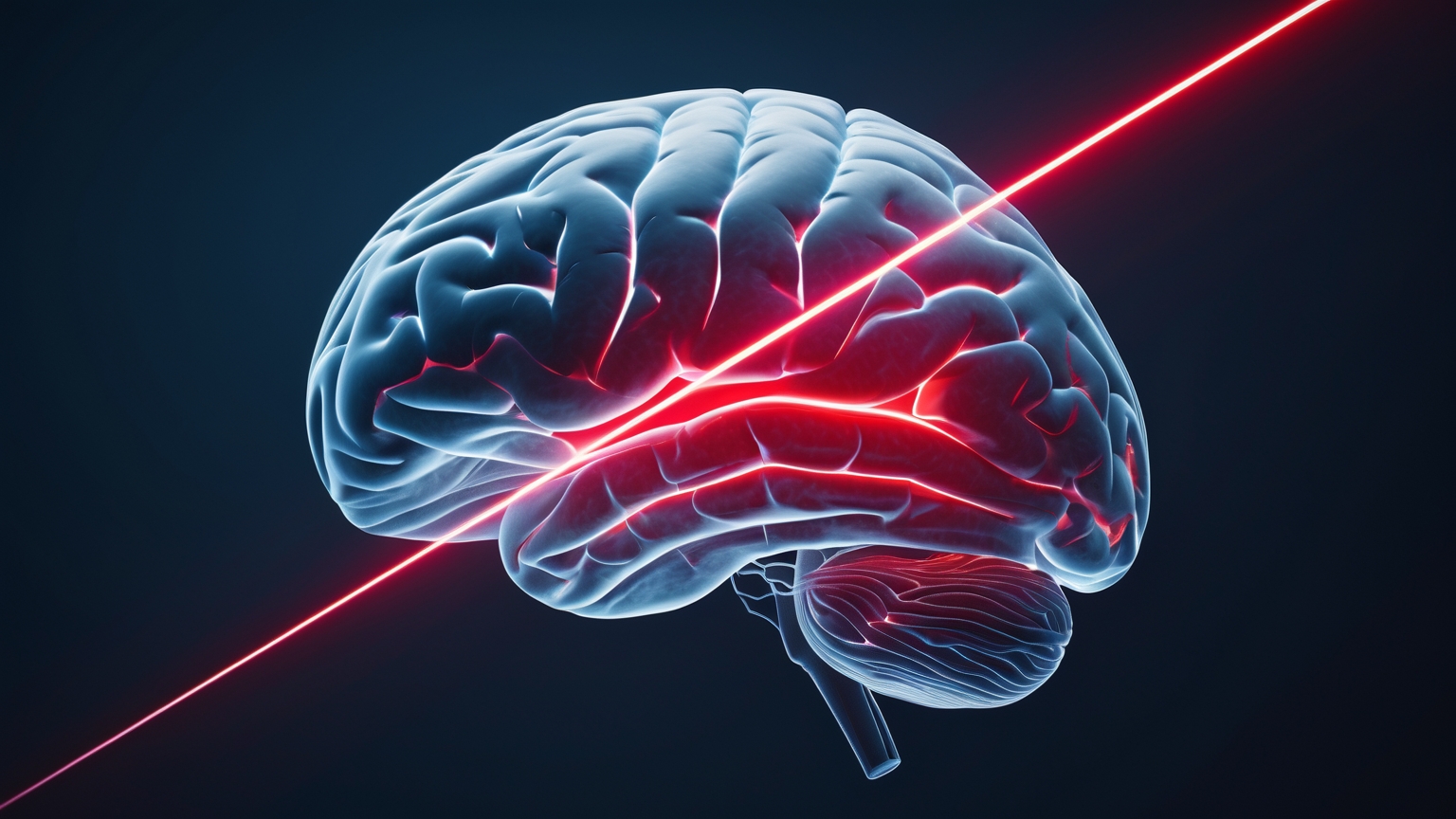
The most dangerous lie the human mind tells is not "I had no choice." It is "I can never go back."
That lie does not come from outside. It is manufactured internally, by the same cognitive machinery that protects the ego from unbearable truths. Anakin Skywalker did not become Darth Vader because he crossed an uncrossable line. He became Vader because his brain could not tolerate the alternative — that he had crossed a line that should not have been crossed, and that he still had the capacity to choose differently.
The "point of no return" is not a feature of reality. It is a feature of cognitive dissonance.
The Dissonance Engine: Festinger's Discovery
In 1957, Leon Festinger identified a mechanism so fundamental it operates in virtually every human decision with moral weight: the mind cannot simultaneously hold two contradictory cognitions without psychological distress. When "I am a good person" collides with "I did a terrible thing," the brain will restructure one of the two beliefs to resolve it.
The restructuring almost never targets the action. The action is concrete, already committed. What changes is the belief system surrounding it.
The moment Anakin intervened against Mace Windu, the action — helping Palpatine kill a Jedi Master — was irreconcilable with "I am a protector of the Jedi Order." Two beliefs could not coexist. Something had to give.
The dissonance engine fired automatically. If he did this, then the Jedi must have deserved it. If Windu was wrong, the Council was wrong. If the Council was wrong, Palpatine was right. If Palpatine was right, the dark side was justified. Each inference followed from the last with the terrible logic of a mind protecting itself from the conclusion it cannot afford to reach: I made a mistake that I can still correct.
Festinger demonstrated this across dozens of experimental contexts. People who commit to a costly or public decision do not evaluate it more critically afterward. They evaluate it less critically. The brain stops weighing evidence and starts building a case.
Commitment and Consistency: The Ratchet That Only Turns One Way
Robert Cialdini's research on commitment and consistency describes the mechanism that locks dissonance in place. Once a person has taken a public, effortful, or identity-relevant action, their subsequent beliefs align with that action — not because the alignment is rational, but because inconsistency between action and belief is psychologically intolerable.
Anakin's actions in the Jedi Temple were the ratchet. The decision in Palpatine's office was the initial fracture. The Temple was where the fracture became load-bearing architecture. These actions were so extreme that reversing course would require confronting not a single error but an entire chain of atrocities.
The more extreme the action, the more the belief system must distort to accommodate it. This is why escalation follows the initial compromise with such reliability. Each subsequent act raises the cost of honest self-evaluation, which makes the next act easier to justify, which raises the cost further. The ratchet turns. The identity follows the behavior.
This is the same mechanism that keeps people in corrupt organizations long after they recognize the corruption. The first ethical compromise was small. By the tenth, the belief system has reorganized around the premise that what they are doing is necessary or unavoidable. Stopping would mean confronting everything that came before — and that confrontation has become more expensive than continuing.
Moral Disengagement: Bandura's Eight Escape Routes
Albert Bandura's theory of moral disengagement identifies eight cognitive mechanisms that allow people to commit harmful acts without experiencing themselves as harmful people. Anakin's trajectory after Windu maps to several with clinical precision.
Moral justification: "The Jedi were plotting to take over the Republic." The massacre became a preemptive defense of democracy. This is the most powerful disengagement mechanism because it transforms the perpetrator into a hero within their own narrative.
Displacement of responsibility: "I did what my Master ordered." Once Anakin accepted Palpatine as authority, individual moral agency was offloaded upward — the same mechanism Stanley Milgram documented in his obedience experiments. When an authority figure accepts responsibility, the individual's internal moral alarm dims.
Dehumanization: "The Jedi are traitors." Not colleagues. Not former friends. Traitors. The reclassification strips targets of moral standing. Bandura showed that dehumanization is the single strongest predictor of extreme violence — because harming a person requires overriding empathy, but harming a category does not.
Attribution of blame: "They forced my hand." The victims become the cause of their own destruction. The locus of causation shifts from self to other, and the dissonance resolves without the perpetrator confronting their own agency.
Together, these mechanisms allow escalating harm while maintaining a coherent self-concept. Vader did not experience himself as a monster. He experienced himself as a necessary instrument of order in a galaxy that had forced his hand.
Escalation of Commitment: The Sunk Cost of the Soul
Barry Staw's research on escalation of commitment documents the pattern: the more a person has invested in a failing course of action, the more likely they are to increase investment rather than cut losses. Applied to moral choices, the mechanism is devastating. Anakin could not stop after the Temple because stopping would mean the younglings died for nothing. That Windu died for nothing. That his betrayal served no purpose. The psychological cost of that admission exceeded the cost of continuing.
Every atrocity became retroactive justification for the one before it. If the purge was wrong, then Windu's death was meaningless. If Windu's death was meaningless, then Anakin destroyed his life for nothing. The escalation was not driven by conviction. It was driven by the unbearable weight of what admitting the error would cost. Any honest decision framework would identify this trap — the moment the cost of reversing exceeds the cost of continuing, the person stops evaluating the direction and starts defending it.
This is the engine behind "I've already gone this far." The phrase sounds like determination. It is capitulation — the moment a person stops choosing and starts being carried by the momentum of prior choices they refuse to examine.
The Identity Inversion: From "I Did Something Dark" to "I Am Darkness"
The terminal stage is not behavioral. It is ontological. There is a moment where the person stops experiencing harmful actions as departures from who they are and begins experiencing them as expressions of who they are.
Anakin crossed this threshold when he took the name Darth Vader. The name was not a mask. It was a reclassification. "Anakin Skywalker" was the identity the dissonance could not sustain — the good person who did terrible things. "Darth Vader" was the resolution. The terrible things were no longer contradictions. They were the job description.
Once behavior has been integrated into identity — once "I did something dark" becomes "I am darkness" — the dissonance disappears entirely. The self-concept has been rebuilt around the actions.
The same inversion happens outside fiction. The person who cheated once and felt guilt becomes the person who cheats habitually and feels nothing — because the identity reorganized to make cheating congruent. The employee who covered for a corrupt boss once becomes the fixer who sees cover-ups as part of the role. Any domain that requires strategic thinking under moral pressure produces this pattern. Behavior precedes identity, and identity calcifies around behavior. The person does not choose who they become. They act, and then they become the person who would have chosen those actions.
The Redemption Proof: Why the Lie Collapses
If the point of no return were real, Vader could never have saved Luke.
But he did. On the Death Star, the dissonance engine that had run for twenty years hit a stimulus it could not process: his son, choosing to die rather than fight, appealing not to Vader but to Anakin. The name reintroduced the identity that the entire Vader construct existed to suppress.
The point of no return collapsed because it was never structural. It was protective — shielding against exactly the confrontation Luke forced: full, unmediated awareness of what had been done and who had done it. In that moment, Anakin paid the cost of looking.
If return were impossible, it could not have happened. The fact that it did — at the highest possible cost, after the longest possible delay — proves that every moment before it was also a potential turning point. The dissonance engine kept those turning points invisible. But invisible is not the same as nonexistent.
The Protocol
The "point of no return" narrative is a cognitive defense, not a factual assessment. Dismantling it requires deliberate confrontation with the dissonance that sustains it.
-
Name the original compromise without euphemism. Not what you told yourself it was — what it actually was. Strip the moral justification, the displacement of responsibility, the attribution of blame. State the action and your agency in it. The dissonance engine runs on ambiguity. Precision kills it.
-
Separate the action from the identity. "I did this" is not "I am this." Bandura's mechanisms work by fusing behavior with selfhood. The intervention is deliberate defusion: holding the action as something that happened without allowing it to define what happens next.
-
Calculate the real cost of continuing versus reversing. Write both in concrete terms. What does the next year look like on this trajectory? What does reversing actually require? The escalation narrative inflates the cost of reversal and discounts the cost of continuation. Put numbers on both.
-
Identify who benefits from the "no return" narrative. The belief that you cannot go back serves someone — often the system or person who profits from your continued trajectory. Palpatine needed Vader to believe return was impossible. Ask: whose interests does my hopelessness serve?
-
Take one action that contradicts the identity the dissonance built. Not a grand reversal. One action. Vader's was removing his mask so his son could see the person underneath. It does not need to undo what was done. It needs to prove that the person who did it still has the capacity to choose differently.
The Paradox That Sets You Free
The deepest cruelty of cognitive dissonance is that it makes the exit invisible precisely when the person needs it most. The further you travel from the original error, the more the mind insists that return is impossible — because the cost of return scales with every step taken in the wrong direction.
But cost is not the same as impossibility. Vader carried twenty years of compounded atrocity and still turned. Not because the cost was low. Because the cost of continuing finally exceeded even the dissonance engine's capacity to suppress it.
The point of no return is the mind's most sophisticated lie — it disguises despair as realism and surrender as inevitability.
Turn around. The door was never locked.