Everyone agrees that people can change. Almost nobody believes it about the person who has been the worst version of themselves for twenty years.
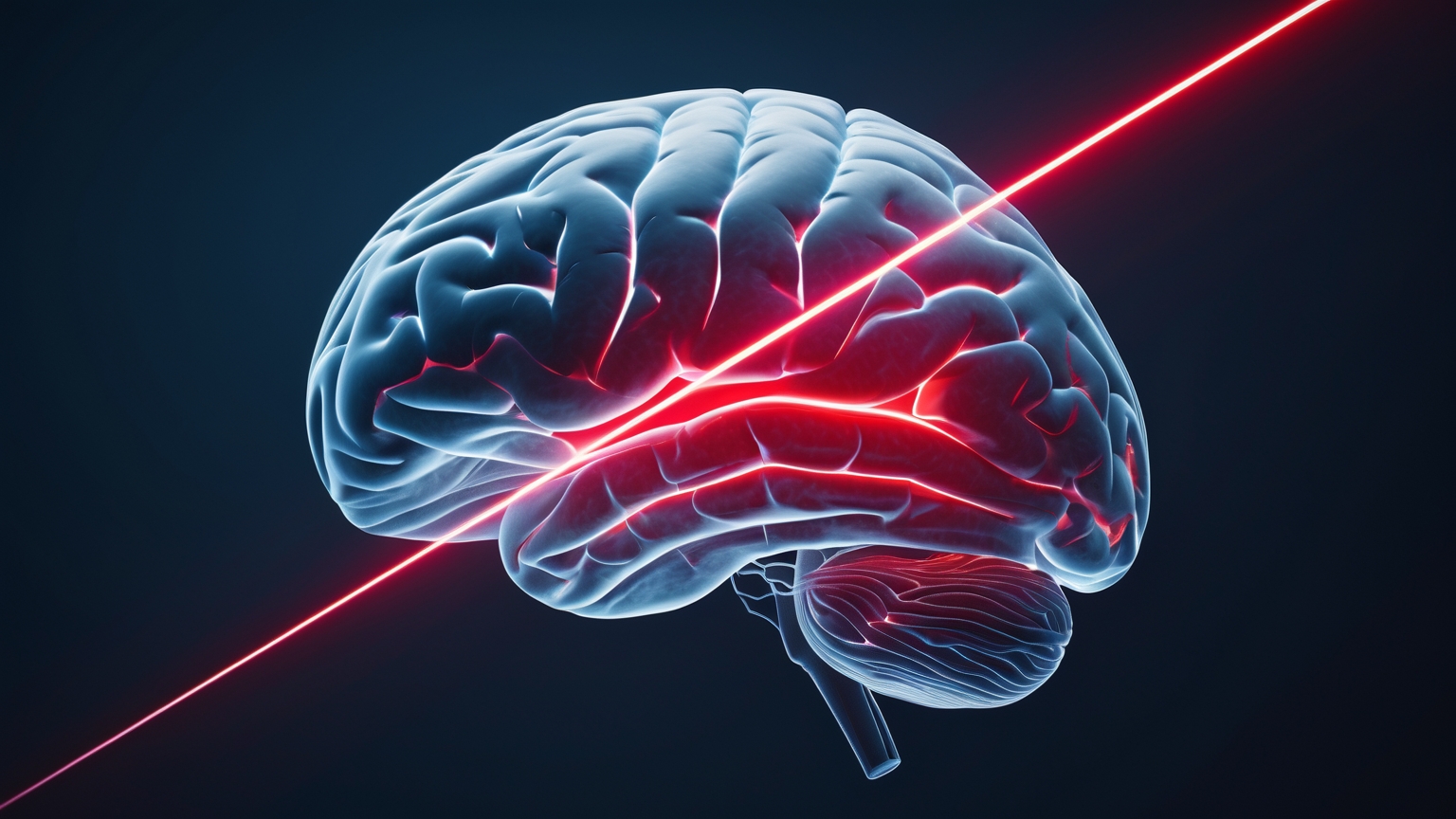
That is the test. Not whether change is possible when the damage is minor and recent — but whether the neural architecture of a human being can reverse course after decades of entrenched behavior, identity calcification, and moral atrocity. Anakin Skywalker spent twenty years as Darth Vader. Twenty years of enforced emotional shutdown, systematic violence, and complete submersion in an identity built on fear and obedience. And in a single moment, the original person broke through. The question is not whether that moment was dramatically satisfying. The question is whether it is biologically plausible. The answer, according to the last four decades of neuroscience, is yes — and the mechanism is more specific than most people realize.
The Neuroplasticity Principle: Nothing Is Permanent Wiring
The foundational claim of modern neuroscience — established through the work of Michael Merzenich, Norman Doidge, and decades of functional imaging studies — is that the brain rewires itself throughout life. Not just in childhood. Not just during critical periods. Throughout life. Merzenich demonstrated that cortical maps reorganize in response to experience at every age. Doidge's clinical documentation in The Brain That Changes Itself catalogued cases of radical neural reorganization in patients whom traditional neurology had written off as permanent.
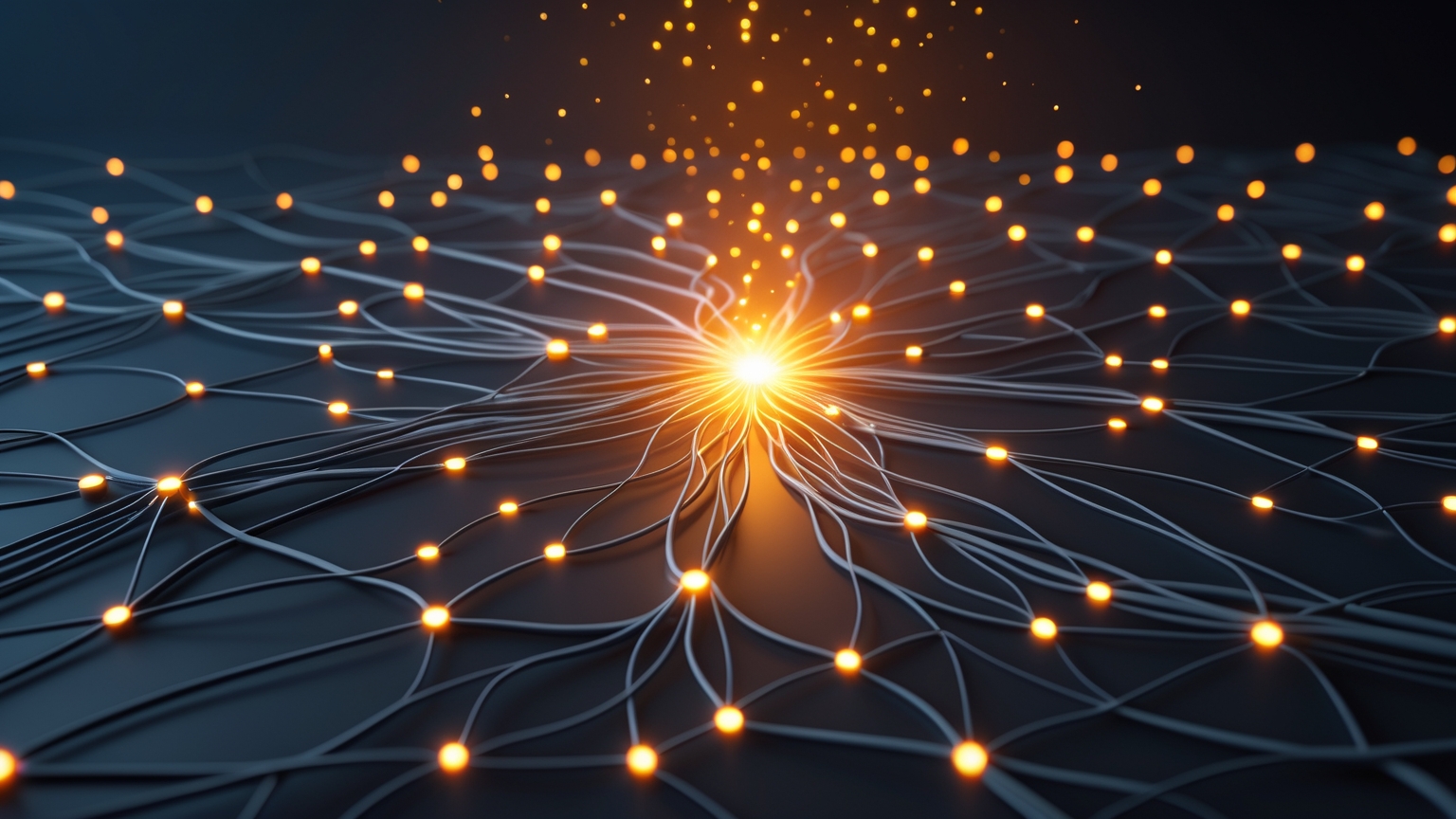
Twenty years of dark side conditioning did not destroy Anakin Skywalker's original neural pathways. It suppressed them. The circuits associated with empathy, parental love, and attachment did not vanish — they were overwritten by dominant patterns of fear, obedience, and dissociation. But overwritten is not erased. Dormant pathways retain their architecture. They can be reactivated — not by willpower, not by argument, but by the right stimulus delivered at the right moment.
The brain was not designed to lock into a permanent state. It was designed to adapt. The dark side exploited that adaptability for twenty years. Luke exploited it in the opposite direction in twenty seconds.
Unconditional Positive Regard: The Catalyst That Bypasses Every Defense
Carl Rogers, the founder of humanistic psychology, identified the single most powerful variable in therapeutic change: unconditional positive regard. The ability to see a person as inherently worthy, independent of their behavior, their history, or their current state. Not approval. Not agreement. The belief that the person underneath the behavior still exists and still matters.
Rogers demonstrated that this stance — communicated consistently and without conditions — produces more therapeutic change than insight, confrontation, or behavioral modification. The mechanism is relational safety. When a human being experiences being seen without judgment, the defensive architecture that maintains destructive patterns loses its necessity. The armor exists to protect against rejection. When rejection stops arriving, the armor becomes weight rather than protection.
Luke Skywalker's approach to Vader was textbook Rogerian. He did not argue ideology. He did not present evidence that the dark side was wrong. He said, with absolute conviction: I know there is good in you. No conditions. No contingencies. No "I'll believe in you if you change first." Just relentless recognition of the person behind the mask.
The Jedi offered conditional acceptance: you are valued if you suppress, comply, and serve. Palpatine offered conditional acceptance: you are valued if you channel fear into power. Luke offered something neither institution ever did — regard without conditions. That was the stimulus that reactivated pathways dormant for two decades.
The Redemption Script: One Relationship Changes the Trajectory
Criminologist Shadd Maruna's research on desistance — the process by which people exit criminal identities — maps directly onto Vader's arc. In Making Good, Maruna studied individuals who had spent decades in serious criminal behavior and then stopped. Not through incarceration. Through identity transformation.
The consistent finding: desistance almost always involved at least one relationship in which the individual was seen as something other than their worst behavior. A partner, a child, a counselor — someone who reflected back a version of the person not defined by what they had done. Maruna called this the "redemption script": a narrative in which the past is reinterpreted not as identity but as something that happened on the way to who the person actually is.
The redemption script does not require forgetting or excusing. It requires reframing — and that reframing is almost never self-generated. It requires a witness.
Luke was that witness. Not Obi-Wan, who gave up. Not Yoda, who saw only threat. Not Padme, who died before she could try. Luke — who had every reason to see only Vader — insisted on seeing Anakin.
The Pattern Interrupt: Bypassing Cognitive Defenses Through Emotional Contact
Vader's cognitive architecture was fortified. Twenty years of Sith doctrine and self-reinforcing identity had built a defensive structure that no argument could penetrate. Jonathan Haidt's work on moral reasoning confirms the mechanism: humans construct arguments to defend positions they arrived at emotionally, not the reverse. You cannot argue someone out of an identity they did not argue themselves into.
Luke did not try. He created what therapeutic models call a pattern interrupt — a moment of emotional contact that bypasses cognitive defenses entirely. The Emperor's torture of Luke with Force lightning was that moment. Not because it was violent, but because it activated the deepest drive in Anakin's original neural architecture: protect the people you love.
That drive had been buried for twenty years. But suppressed is not destroyed. When Anakin watched his son being tortured to death — and recognized that the dark side was the source of that torture, not the solution to it — the dormant circuit fired. The interrupt worked because it did not engage Vader's ideology. It engaged Anakin's biology. The drive to protect a child is subcortical. It operates below the level where Sith doctrine has jurisdiction.
Logic fails where love succeeds because cognitive defenses are built to repel cognitive attacks. They have no mechanism for a moment of genuine emotional contact that activates a drive they were never designed to suppress.
The Biochemistry of Return: Cortisol, Oxytocin, and the Relational Override
The biological substrate of Vader's transformation is not mystical. It is hormonal.
Chronic stress and fear conditioning — the operational environment of the dark side — produce sustained cortisol elevation. Robert Sapolsky's research demonstrates that prolonged cortisol exposure suppresses the hippocampus, impairs prefrontal function, and strengthens amygdala circuits. Twenty years in the suit was twenty years of cortisol-dominant neural remodeling.
But cortisol dominance is not permanent. Oxytocin — released through physical touch, relational bonding, and experiences of safety — directly counteracts cortisol's effects. It downregulates the amygdala, restores prefrontal function, and reactivates empathy circuits. Ruth Feldman's research on parent-child bonding demonstrates that oxytocin release during parental contact can override years of stress-conditioned neural patterns.
The desperate act of protecting a child is not a sentimental gesture. It is a biochemical event. Oxytocin flooding a cortisol-saturated system is the molecular equivalent of rebooting a corrupted operating system. The old pathways do not need to be rebuilt from scratch. They need the chemical environment that allows them to fire again.
This is why Johann Hari's observation that "the opposite of addiction is not sobriety — it is connection" resonates beyond addiction research. Connection is the biochemical antagonist to every fear-based conditioning pattern. It does not persuade the brain to change. It changes the chemical environment in which the brain operates. The same principle drives any sound decision framework: the conditions surrounding the decision matter more than the arguments within it.
Real-World Redemption: The Evidence Beyond Fiction
The Vader arc is dramatic, but the mechanism is ordinary.
Addiction recovery research consistently shows that relational connection predicts sustained recovery more reliably than any specific treatment modality. One relationship characterized by unconditional support — not enabling, but genuine regard — dramatically increases long-term sobriety rates.
Veterans with severe PTSD who recover most fully almost always cite one relational factor — a spouse, a child, a therapist — who provided consistent safety without demanding the trauma be "gotten over." Relational safety allows fear circuits to downregulate, restoring prefrontal function and enabling the emotional processing that rewires conditioned threat responses.
Former extremists — studied by researchers including Arie Kruglanski and John Horgan — who exit radical organizations almost universally describe one person who saw them as more than their ideology. Not someone who argued against their beliefs. Someone who related to them as a human being first. The relationship preceded the ideological shift, not the reverse. This is competitive intelligence applied to human psychology: the mechanism of deradicalization is not counter-argument. It is counter-relationship.
The pattern is identical in every case. Entrenched destructive behavior. Years of reinforcement. And then one relationship that provided the stimulus for dormant pathways to reactivate.
The Protocol
Rewiring is not a metaphor. It is a biological process with specific conditions.
-
Accept that dormant does not mean dead. Neural pathways associated with empathy, connection, and moral reasoning do not disappear under years of suppression. They go quiet. The first step in any redemption process is rejecting the premise that people become permanently what they have been. Neuroplasticity is not age-limited. It is condition-dependent.
-
Provide unconditional regard, not unconditional approval. Rogers was precise about this distinction. Unconditional positive regard does not mean accepting harmful behavior. It means maintaining the belief that the person underneath the behavior has worth. "What you did is unacceptable. Who you are is not reducible to what you did." That distinction separates confrontations that reinforce defenses from relationships that dissolve them.
-
Stop arguing and start creating emotional contact. Entrenched patterns are cognitive fortresses. Logical arguments hit the walls and bounce off. Emotional contact — genuine human connection that bypasses defensive architecture — is the only intervention that reaches the circuits underneath. Be Luke, not Obi-Wan. Do not debate the darkness. Refuse to stop seeing the light.
-
Build the biochemical counter-environment. One intense moment of connection is the catalyst, but rewiring requires ongoing relational contact that maintains the biochemical conditions for new pathways to strengthen. Sustained safety produces oxytocin. Oxytocin counteracts cortisol. Recovery is not a moment. It is an environment.
-
Hold the redemption script when the person cannot hold it themselves. Maruna's research is clear: the narrative of "I am more than the worst thing I have done" must exist somewhere before the person can internalize it. Hold it. Reflect it back. The person may reject it for months or years. That does not mean it is not landing. It means the old pathways are still dominant. Persistence is the variable.
The deepest lesson of the Vader arc is not that Anakin was redeemed by love. It is that the brain he carried for twenty years inside that suit was never a finished product. The dark side shaped it. Trauma calcified it. Imperial conditioning reinforced it. And none of that was permanent — because nothing in the brain is permanent. Plasticity is not a window that closes. It is the fundamental operating principle of neural tissue at every age, in every condition, without exception.
The armor was never the person. Remove the conditions that require it, and the person is still there.
Start building the circuit.