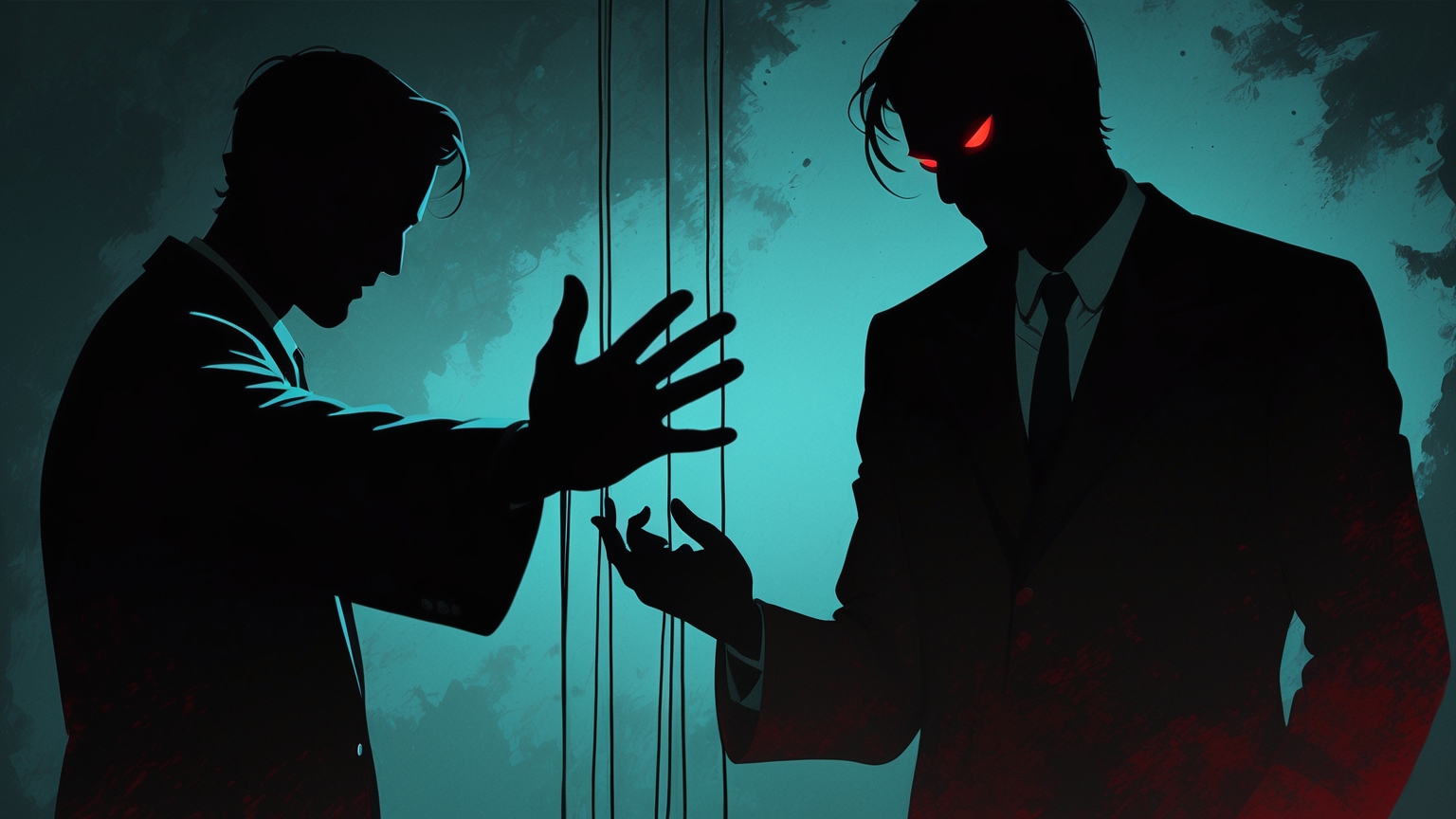
You stayed in the job a year longer than you should have. You kept dating someone you knew wasn't right because of how much history you'd built together. You held the investment through a 40% drawdown because selling would have meant admitting the loss was real.
None of these were irrational in the way we usually mean irrational. They were completely predictable outputs of a specific cognitive pattern that your brain runs automatically. It's called the sunk cost fallacy — and it compounds the longer you ignore it.
What Barry Staw Established
In 1976, organizational psychologist Barry Staw published research on what he called "escalation of commitment" — the tendency of decision-makers to increase investment in a failing course of action precisely because of prior investment. His studies showed that people who had personally made the original decision were far more likely to double down than people who inherited the situation.
The pattern appears at every scale. Individuals. Teams. Corporations. Governments. The mechanism doesn't care about the size of the institution or the intelligence of the people running it.
What Staw documented wasn't irrationality — it was a predictable response to a specific psychological pressure: the need to justify past decisions. The more you've invested, the more a reversal implies that the original decision was wrong — and the brain works hard to avoid that conclusion.
Why Losses Hit 2.5x Harder
Kahneman and Tversky's prospect theory established the asymmetry: losses are experienced as approximately 2.5 times more painful than equivalent gains are pleasurable. A $1,000 loss feels significantly worse than a $1,000 gain feels good.
This asymmetry creates a systematic distortion. When you've already invested significantly in something, exiting means realizing a loss — which the brain treats as a pain signal. Continuing, even when the fundamentals are bad, prevents that immediate pain. The future costs of continuing are abstract and discounted. The present pain of realizing a loss is immediate and intense.
So you continue. Not because continuing is logical. Because stopping hurts more right now.
The Survival Signal Distortion
There's a deeper layer. The brain interprets "not wasting" prior investment as a form of self-preservation. Abandoning sunk costs can feel like abandoning part of yourself — the version of you that made the original decision, invested the time, built the relationship.
This is why organizations double down on failed strategies with the same regularity as individuals: the sunk cost creates an identity stake. Exiting the strategy is experienced as admitting institutional failure, not as exercising rational judgment about future value.
The Protocol
The corrective is a forced perspective shift. Run this audit before any significant decision about whether to continue something.
- Ask the clean-slate question — in writing. "If I were starting today with no prior investment, no history, and a clean slate — would I choose this?" Write the answer. Not "should I stay given how much I've put in." That's the sunk cost frame talking. Strip it. Binary answer only: yes or no.
- List the concrete alternative within 10 minutes. What specifically would you gain by starting fresh today? Not abstract freedom — specific opportunities, resources recovered, time reclaimed. If you can't name the alternative concretely, you haven't done the analysis. Any decision framework worth using forces this step — because "I'd be free" is not a plan.
- Name the emotions attached to exiting — out loud. Write them down: guilt, fear of waste, identity threat, shame. Sunk cost reasoning disguises itself as logic. The emotions underneath are the actual driver, and naming them reduces their influence on the decision by activating prefrontal override.
- Evaluate the future as a new investment. The past expenditure is gone whether you continue or not. It is not a variable. Ask only: "Given where I am today, is continuing the best use of the next unit of time and resources?" If the answer is no, the decision is already made.
The past cannot be recovered. It can only be used as a reason to make worse decisions going forward — or not.
The question was never "how much have I spent?" The question is always "what do I do next?"