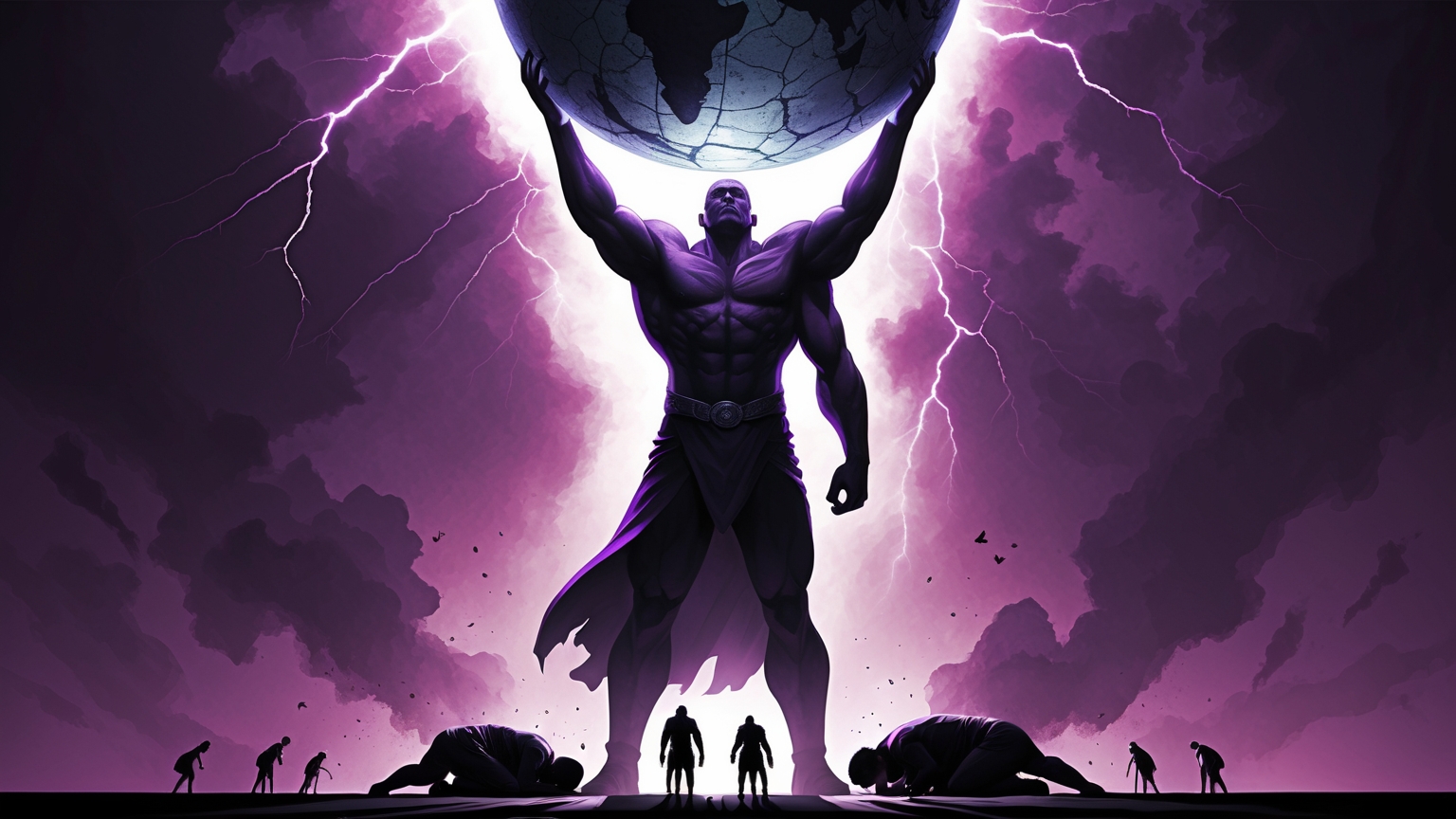
The Jedi Order is remembered as a force for good that was betrayed from within. That framing protects the institution and blames the individual. The actual sequence of events tells a different story.
The Jedi Council took the most powerful Force-sensitive being in recorded history, stripped him of every healthy coping mechanism, surveilled his loyalty, denied him trust, punished his honesty, and then acted surprised when the only person who offered him psychological air was a Sith Lord. This is not a story about one man's fall. It is a case study in how institutions engineer the exact failures they claim to prevent.
Zero Psychological Safety in a High-Stakes System
Amy Edmondson's research at Harvard defines psychological safety as the shared belief that a team is safe for interpersonal risk-taking. Not comfort. Not agreement. The willingness to say the dangerous thing without career-ending consequences. Google's Project Aristotle confirmed it as the single strongest predictor of team effectiveness across thousands of teams.
The Jedi Council had none of it.
Anakin could not express fear without being told fear leads to the dark side. He could not express love without violating a core tenet of the Order. He could not express doubt about the Council's decisions without being treated as a security risk. Every honest emotion was a violation. Every authentic disclosure was evidence against him.
So he stopped disclosing. This is what happens in every psychologically unsafe system. People don't stop having the feelings. They stop reporting them. The information goes underground, where it compounds without correction. When an institution makes honesty dangerous, it doesn't get honest people. It gets people who are very good at hiding.
Anakin hid his marriage. He hid his nightmares about Padme. He hid his growing resentment toward the Council. And the one person who said "tell me everything" was Sheev Palpatine. Not because Palpatine cared. Because Palpatine understood what the Jedi refused to: suppressed disclosure doesn't disappear. It finds the first available outlet. And if you're the only open channel, you control the flow.
The Pressure Cooker: Mandated Emotional Suppression
"There is no emotion, there is peace." The Jedi Code does not say manage your emotions. It says they should not exist.
James Gross at Stanford has spent three decades studying emotional regulation strategies. His research consistently shows that suppression — the attempt to not feel or not express an emotion — does not reduce the emotional experience. It intensifies it. Suppression increases sympathetic nervous system activation, impairs memory, damages social connection, and paradoxically makes the suppressed emotion more intrusive over time. The harder you push it down, the harder it pushes back.
The Jedi mandated the single worst emotional regulation strategy in the clinical literature and enforced it across an entire institution of people trained to channel raw psychic energy through their emotional state. The architecture was catastrophic by design.
Anakin was told not to feel attachment. He felt it more intensely. He was told not to feel fear. The fear metastasized into panic. He was told not to feel anger. The anger became the only emotion strong enough to break through the suppression. This is not a character flaw. This is the documented, replicated, peer-reviewed outcome of chronic emotional suppression.
Every organization that tells its people to "leave emotions at the door" is running the same experiment with the same result. The emotions don't stay at the door. They walk in wearing a different face.
The Talent Management Failure
Anakin Skywalker was the most gifted Force user the Jedi had encountered in a generation — possibly ever. The rational institutional response to generational talent is investment: mentorship, development pathways, adaptive support structures that channel ability toward the mission.
The Jedi response was suspicion.
They debated whether to train him at all. They assigned him a padawan learner before he was ready, not as development but as a test. They placed him on the Council but denied him the rank of Master — a decision framework designed to signal distrust while appearing to offer inclusion. They used him as an asset in wartime while questioning his loyalty in peacetime.
This pattern is instantly recognizable in any organization that has lost exceptional talent. A high-performer joins. They don't fit the mold. Rather than adapting the mold, the institution treats the misfit as a threat. The performer's unconventional thinking, which is the entire reason they were recruited, gets reframed as insubordination. Their intensity becomes a liability. Their questions become evidence of disloyalty.
The performer learns that excellence is tolerated but difference is not. And they leave — or worse, they stay and become exactly what the institution feared, because the institution's treatment made the alternative impossible.
The Windu Doctrine: Distrust as Self-Fulfilling Prophecy
Mace Windu's explicit, repeated distrust of Anakin is the clearest example of the Pygmalion effect operating in reverse. Robert Rosenthal's research demonstrated that expectations shape performance — leaders who expect more get more, and leaders who expect failure create the conditions for it.
Windu communicated, consistently and openly, that he did not trust Anakin. Not privately. Not subtly. In Council chambers, in front of peers, through assignments designed to test loyalty rather than build capability. Windu's distrust was not hidden. It was doctrine.
When the most senior authority figure in your system communicates that you are not trusted, you have two choices: prove them wrong endlessly, or stop trying. Most people choose the first option until they can't sustain it, then default to the second. Some find a third path — they find someone who does trust them, regardless of that person's motives.
Palpatine trusted Anakin. Palpatine praised him. Palpatine told him his power was a gift, not a threat. That every word of it was strategic manipulation doesn't change the psychological mechanics. Anakin moved toward the source of validation because the institution that should have provided it offered only suspicion.
This is how organizations lose people to competitors, to burnout, to disengagement. Not because the alternative is better. Because the alternative is the only place that feels survivable.
Correct Advice, Zero Support: The Yoda Problem
When Anakin finally does what a psychologically safe system would encourage — he goes to a senior leader and discloses his fear of losing someone he loves — Yoda's response is textbook avoidance-oriented coping advice: "Train yourself to let go of everything you fear to lose."
The advice is, in isolation, psychologically sound. Acceptance-based approaches to anxiety, documented by Steven Hayes in Acceptance and Commitment Therapy, do show that rigid attachment to outcomes amplifies suffering. Letting go is a legitimate therapeutic goal.
But it is a goal that requires therapeutic scaffolding. It requires trust, safety, guided practice, and a relationship where the person feels held while they do the hardest emotional work of their life. Yoda offered a destination with no map, no vehicle, and no companion for the journey.
Telling a person in acute emotional crisis to simply release the thing they're afraid of is like telling a drowning person to relax. Technically correct. Operationally useless. And in context, it communicates something worse than uselessness — it communicates that the institution has no mechanism to actually help. That the individual is alone with the problem, and the system's only offering is philosophy.
Anakin walked out of that conversation knowing that the Jedi Order had nothing for him. Not because Yoda was wrong. Because the system behind Yoda had no infrastructure for the intervention that was needed.
The Protocol
Every organization that manages high-stakes talent in high-pressure environments should run this audit. The Jedi didn't fail because of one bad decision. They failed because of structural neglect across every dimension that matters.
-
Build disclosure channels before you need them. Psychological safety cannot be retrofitted during a crisis. The time to normalize honest conversation about fear, doubt, and struggle is when things are stable — not when someone is already drowning. If your people can only be honest when things are fine, they will be silent when things are not.
-
Replace suppression mandates with regulation training. Telling people not to feel is not a strategy. It is a liability. Invest in emotional regulation skills — cognitive reappraisal, mindfulness-based approaches, structured reflection. Gross's research is clear: reappraisal outperforms suppression on every measurable outcome. Teach people to work with their emotions, not against them.
-
Match investment to talent, not to compliance. The individuals who don't fit your mold are often the ones with the highest ceiling. Treating nonconformity as disloyalty is how institutions select for mediocrity. Exceptional talent requires adaptive leadership — mentors who flex to the individual, not the other way around.
-
Audit your trust signals. Leaders communicate trust and distrust constantly, often unconsciously. Run a competitive intelligence analysis on your own leadership signals. What do your assignments, your meeting dynamics, your feedback patterns actually communicate about who you trust? If there is a gap between your stated values and your operational signals, your people are reading the signals.
-
Provide scaffolding, not just philosophy. Correct advice without support infrastructure is abandonment dressed as wisdom. If your organization identifies a problem in one of its people, the response must include resources, not just principles. A framework without follow-through is a closed door with a motivational poster on it.
The Jedi Council didn't lose Anakin Skywalker to the dark side. They lost him to institutional neglect — the same way every rigid organization loses the people it most needs to keep. Not with a dramatic betrayal, but with a thousand small failures to meet a human being where they actually were.
The system that cannot adapt to its most talented individuals will always produce the outcomes it fears most. Build the system that can.